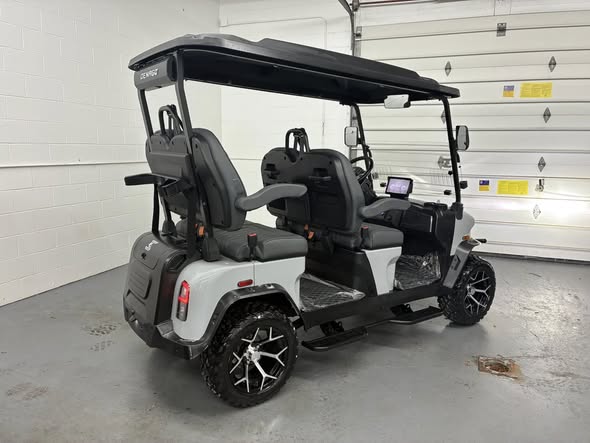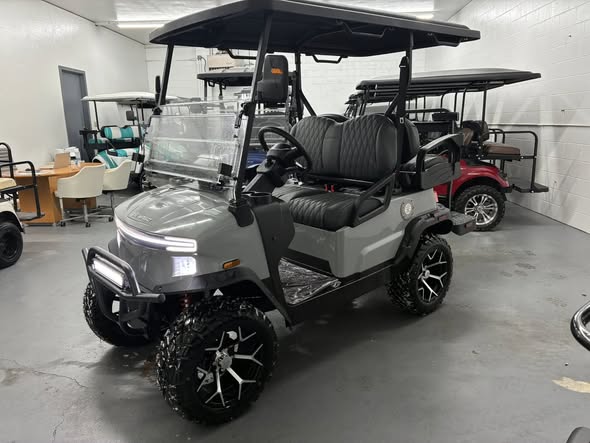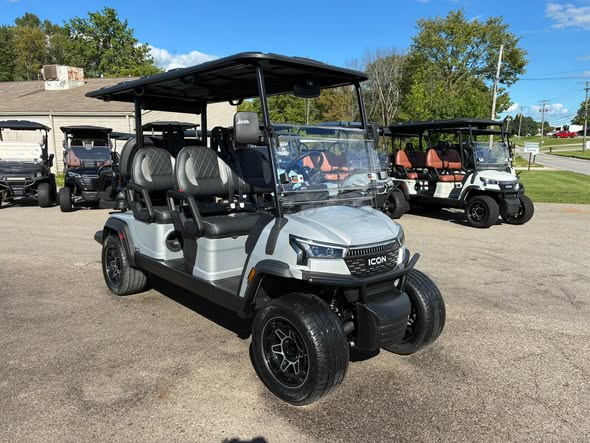
A thorough used golf cart checklist is the best tool you can bring to a private sale or a dealer lot. Pre-owned carts can be outstanding value, but two carts that look identical in photos can be worlds apart once you check the batteries, frame, steering and paperwork.
We inspect, recondition and sell used gas, electric and lithium carts every week in Northeast Ohio, and this guide shares the same points we look at. Print it, save it on your phone, and work through it step by step before you hand over any money.
Why You Need a Used Golf Cart Checklist
Golf carts live hard lives. Some spent years on a golf course fleet, some sat in a barn, and some were lifted, customized and driven hard on trails. A fresh coat of paint and new seat covers can hide expensive problems underneath. A used golf cart checklist keeps you focused on what actually costs money to fix.
The most expensive surprises we see are worn-out battery packs, rusted or acid-damaged frames, failing motors or controllers, engine and clutch problems on gas carts, and missing paperwork. Every item on this used golf cart checklist is designed to catch those issues before you buy.
What to bring along with your used golf cart checklist
- A flashlight for looking under the cart and into the battery compartment
- A digital multimeter for checking battery voltage on electric carts
- Gloves and a rag
- Your phone to photograph serial numbers, battery date codes and any damage
- A printed copy of this used golf cart checklist
Used Golf Cart Checklist Step 1: Identify the Cart and Check the Paperwork
Start your used golf cart checklist before you even look at the paint. Find the manufacturer’s serial number plate or sticker. Its location varies by brand and model, so ask the seller or look it up for EZGO, Club Car or Yamaha. The serial number helps confirm the model year and can reveal whether the cart has been reported stolen.
- Confirm the year, make and model match the ad.
- Photograph the serial number.
- For a street-legal LSV, check that the 17-character VIN matches the title.
- Ask for a written bill of sale with the serial or VIN, price, date and both parties’ names.
- Ask for any service records, battery receipts and the original owner’s manual.
If a seller cannot or will not show you the serial number, walk away. If you plan to drive on public roads, read our street legal golf cart Ohio guide first, because paperwork determines whether a cart can be titled.

Step 2: Inspect the Frame and Body
The frame is the backbone of the cart and one of the most important entries on any used golf cart checklist. Get down with your flashlight and look underneath from front to back.
- Rust and corrosion: Many carts use steel frames that can rust, especially under the battery compartment where acid can leak. Club Car is well known for aluminum frames that resist rust, but still inspect for cracks and corrosion at mounts.
- Battery tray area: Look for flaking metal, crusty residue or holes from years of acid spills on lead-acid carts.
- Welds and cracks: Check around the front suspension mounts, rear axle mounts and any lift kit brackets.
- Accident damage: Look for bent components, mismatched panels or frames that sit crooked.
- Body panels: Cracks and scuffs are cosmetic, but broken mounts can cause rattles and loose panels.
Surface rust is common and often manageable, so note it on your used golf cart checklist and move on. Rust that has eaten through structural areas is a serious problem and a reason to pass unless the price reflects a major repair.
Step 3: Check the Batteries on Electric Carts
For electric carts, the battery section of your used golf cart checklist deserves the most time. A worn battery pack is the single most common expensive surprise on a used electric cart.
Lead-acid batteries
- Age: Look for date codes stamped or stickered on each battery. Flooded lead-acid batteries typically last around four to six years with good care.
- Matching set: All batteries should be the same brand, type and age. A single new battery in an old set is a warning sign.
- Corrosion: Check terminals and cable ends for white or green buildup.
- Water levels: With the cart off, carefully check that plates are covered. Dry cells suggest neglect.
- Case condition: Swollen, cracked or leaking cases mean replacement.
- Voltage: With a multimeter, a fully charged, rested 48-volt lead-acid pack typically reads a little above 50 volts. Much lower readings after a full charge suggest weak batteries.
Lithium batteries
- Ask for the pack’s brand, capacity, age and any remaining warranty.
- Confirm the correct lithium charger is included.
- Check the state-of-charge gauge or app, if equipped, for errors.
- Inspect the pack and mounting for damage, and make sure it is secured firmly.
On a used golf cart checklist, a healthy lithium pack is a real plus, because lithium can add significant value to a used cart. Learn more in our guide to lithium golf cart batteries.
Test the charger
Plug in the charger and confirm that it turns on and begins charging. Onboard chargers should show a charging light or indicator. A missing or broken charger is an added cost, and lithium packs in particular need the right charger.
Step 4: Check the Engine on Gas Carts
For gas carts, the engine and drivetrain portion of the used golf cart checklist replaces the battery section. Ask the seller not to start the cart before you arrive so you can hear a true cold start.
- Cold start: It should start without long cranking.
- Idle and smoke: Listen for a smooth idle. Blue smoke can indicate oil burning; heavy black smoke can point to fuel problems.
- Oil: Check the dipstick. Very dark, sludgy or low oil suggests missed maintenance.
- Leaks: Look under the engine for oil or fuel leaks.
- Belts: Inspect the drive belt and starter-generator belt for cracks, glazing and fraying.
- Clutches: Jerky engagement or slipping can mean clutch wear.
- Fuel system: Check the tank, lines and filter for cracks or old fuel smell.
- 12-volt battery: Confirm it is healthy and securely mounted.
Fuel-injected models, like EFI versions of the EZGO RXV and Club Car Precedent, tend to start more easily than older carbureted engines. For help choosing between power types, see our gas vs electric golf cart comparison.
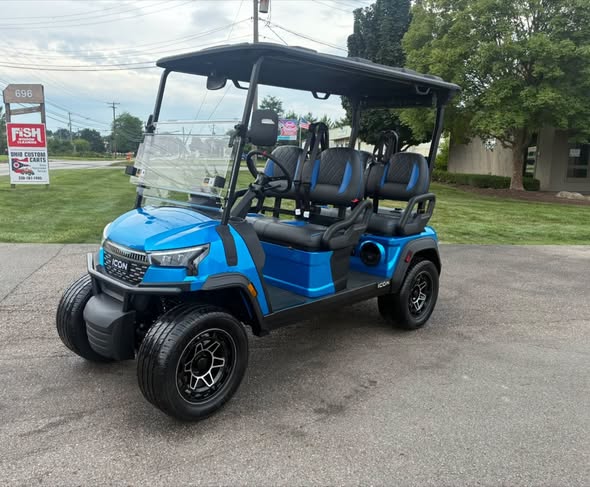
Used Golf Cart Checklist Step 5: Steering, Suspension, Tires and Brakes
This part of the used golf cart checklist protects your safety. Worn steering and brakes may not be obvious in photos but become obvious on the first ride.
Steering
- With the cart stopped, turn the wheel gently. Excessive free play before the wheels move suggests worn tie rod ends or steering components.
- Listen for clunks when turning.
- Check that the cart tracks straight on the test drive.
Suspension and lift kits
- Look for worn bushings, sagging leaf springs and leaking shocks.
- On lifted carts, check lift kit brand, brackets and bolts for cracks or loose hardware.
- Uneven ride height side to side is a red flag.
Tires and wheels
- Look for uneven wear, which can indicate alignment problems.
- Check for dry rot, cracking and mismatched sizes.
- Inspect wheels for bends and missing lug nuts.
Brakes
- Test the service brake at low speed; the cart should stop straight without pulling.
- Test the parking brake on a slope if possible.
- Listen for grinding, which can mean worn shoes or pads.
Step 6: Electrical Accessories and Controls
Accessories add value only if they work. Go through every switch on your used golf cart checklist.
- Headlights, taillights and brake lights
- Turn signals and horn
- Reverse buzzer and forward/reverse switch
- Battery gauge or state-of-charge display
- USB ports, sound bars, light bars and under-glow lighting
- Key switch or keyless ignition
As part of this used golf cart checklist step, look under the seat and dash for messy wiring, electrical tape, melted insulation or burned connectors. Poorly installed accessories are a common source of electrical gremlins and can drain batteries.
Step 7: The Used Golf Cart Checklist Test Drive
No used golf cart checklist is complete without a real test drive. Drive for at least several minutes, not just a lap of the driveway.
- Accelerate from a stop. It should be smooth, with no jerking, stuttering or hesitation.
- Drive at full speed on a level surface and note whether the speed seems right for the model.
- Climb a hill if one is available. Electric carts that slow badly may have weak batteries or a motor or controller issue.
- Test reverse and tight turns.
- Brake firmly and listen for unusual noises.
- After the drive, check for new leaks, hot smells or warm cables.
Listen for whining, grinding or clunking from the rear axle, which can point to differential wear. If the seller will not allow a test drive, that is a significant warning sign.
Used Golf Cart Checklist Summary Table
Use this quick-reference table to score each area of the cart. It condenses the full used golf cart checklist into what to check and what should make you pause.
| Area | What to Check | Red Flags |
|---|---|---|
| Paperwork | Serial number or VIN, bill of sale, title if LSV | Missing or altered serial, no proof of ownership |
| Frame | Rust, cracks, acid damage, straightness | Rust-through, cracked welds, bent members |
| Batteries (electric) | Date codes, matching set, voltage, corrosion | Old or mismatched batteries, swelling, low voltage |
| Engine (gas) | Cold start, idle, oil, leaks, belts | Hard starting, smoke, sludge, leaks |
| Steering and suspension | Free play, bushings, springs, lift hardware | Loose steering, cracked brackets, sagging |
| Brakes and tires | Straight stops, parking brake, tread | Pulling, grinding, dry rot |
| Electrical | Lights, signals, horn, gauges, wiring | Burned connectors, messy wiring |
| Charger | Turns on and charges | Missing or wrong type for battery |
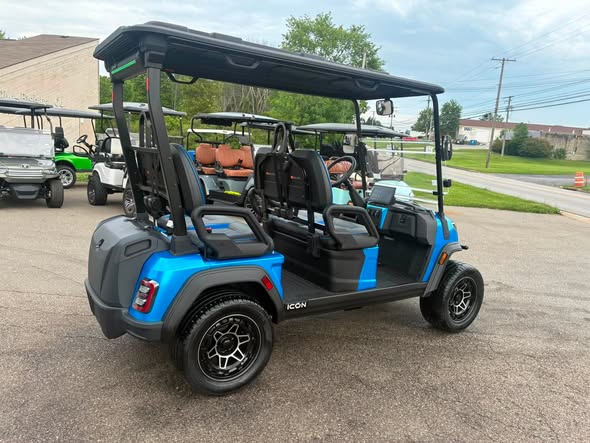
Used Golf Cart Checklist for Lifted and Custom Carts
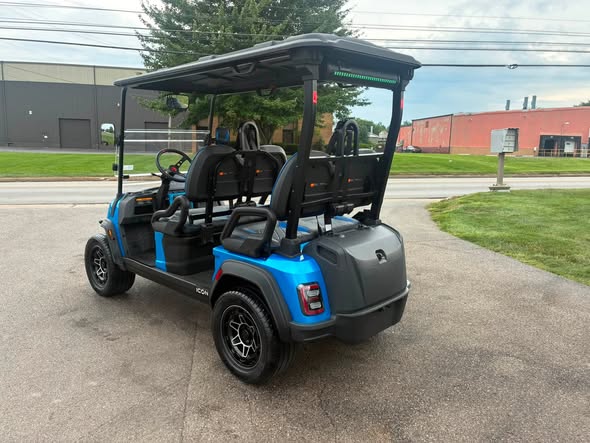
Custom builds are some of the most fun carts on the market, and several in our inventory are fully restored with lift kits, wheels, extended roofs and flip seats. They also deserve a few extra lines on your used golf cart checklist, because upgrades change how the cart works.
- Who did the work? Ask whether the lift, wheels and accessories were professionally installed.
- Performance upgrades: High-speed motors, upgraded controllers or engine governor adjustments affect reliability and, on road-use carts, classification.
- Tire size: Larger tires reduce range on electric carts and change gearing on gas carts.
- Restoration quality: On a body-off restoration, ask what was replaced and whether the frame was treated or repaired.
- Rear seat kits: Check that flip seats latch securely and that grab bars are tight.
A well-built custom cart can be a great buy. Just make sure your used golf cart checklist covers the upgrades as carefully as the basics.
Questions to Ask the Seller
The conversation is part of your used golf cart checklist too. How a seller answers simple questions often tells you as much as the inspection.
- How long have you owned the cart, and how was it used?
- When were the batteries installed, and do you have the receipt?
- Has the cart ever had motor, controller, engine or clutch work?
- Where was it stored, and was it kept charged over the winter?
- Has it been in any accidents or modified for more speed?
- Does it come with the charger, keys, manual and any spare parts?
- Why are you selling?
Write the answers down next to your used golf cart checklist notes. Vague or changing answers are worth a second look before you commit.
When to Use Your Used Golf Cart Checklist in Ohio
Timing can affect both selection and price. In Northeast Ohio, demand tends to rise in spring as the weather warms, while late fall and winter can bring more motivated sellers. The catch is that winter makes a thorough test drive harder, and cold temperatures reduce battery performance, which can hide or exaggerate problems.
If you shop in the off-season, try to inspect the cart in a heated garage and ask how it was stored. A lead-acid cart left discharged in the cold may have damaged batteries, so give that part of your used golf cart checklist extra attention.
Pricing, Negotiation and Hidden Costs
Once your used golf cart checklist is complete, use what you found to judge the price. Used cart prices vary widely based on year, brand, battery type, condition and upgrades, so compare similar carts rather than relying on a single number.
- Battery replacement: On lead-acid carts with old batteries, budget for a new set or a lithium conversion.
- Tires and brakes: Worn items add up quickly.
- Charger: A missing charger is an added expense.
- Gas engine service: Overdue oil changes, belts and clutch work.
- Transport: Factor in how you will get the cart home.
Be respectful but direct, and let your used golf cart checklist notes do the talking. If the batteries are near the end of their life, it is fair to point that out and ask the seller to account for it.
Private Sale vs Buying From a Dealer
Whoever the seller is, the same used golf cart checklist applies. A private sale can come with a lower price, but it usually means no warranty, no reconditioning and no help if something fails the following week. Buying a used cart from a dealer typically costs a bit more, but the cart has usually been inspected and serviced, and you get local support.
At Custom Carts, many of our used carts are fresh trade-ins that we evaluate before they hit the lot. You can browse current used golf carts, ask about financing with approved credit, and put your current cart toward the purchase through our trade-in program. You are always welcome to bring this used golf cart checklist with you when you visit.
Brand-specific resources
Manufacturer websites support your used golf cart checklist with owner’s manuals, model-year details and maintenance schedules. Helpful starting points include EZGO, Club Car and Yamaha. Our overview of the best golf cart brands also compares popular models.
After You Buy: First Steps
Once the cart is home, a few quick steps beyond the used golf cart checklist set you up for years of reliable use.
- Fully charge an electric cart with the correct charger, or change the oil and filters on a gas cart.
- Check tire pressure and adjust to the recommended level.
- Clean and tighten battery connections.
- Start a simple log of maintenance and battery dates.
- Arrange insurance, especially if you plan any road use where permitted.
Our golf cart maintenance guide covers a full seasonal routine.
Frequently Asked Questions
What is the most important item on a used golf cart checklist?
For electric carts, it is the battery pack, since replacement is the most common major expense. For gas carts, it is the engine and drivetrain. On every cart, frame condition and paperwork are close behind.
How can I tell how old golf cart batteries are?
Most lead-acid batteries have a date code stamped on a terminal or printed on a label. Lithium packs often have a label with a manufacture date, and the seller may have a receipt. When in doubt, ask for documentation.
How can I find out what year a golf cart is?
Use the manufacturer serial number. Most major brands encode the model year in the serial, and dealers or manufacturer resources can help decode it.
Is a used lithium golf cart worth it?
It can be an excellent value if the pack is healthy, the correct charger is included and any remaining warranty transfers. Confirm the pack’s age and capacity before you buy.
Should I buy a used golf cart without a test drive?
We do not recommend it. A test drive reveals steering, brake, motor and battery issues that photos and descriptions cannot. If a test drive is impossible, ask for a video and buy from a seller who offers support.
Shop Used Carts With Confidence
A careful inspection is the difference between a great deal and a costly mistake. Work through each step of this used golf cart checklist: paperwork, frame, batteries or engine, steering, brakes, electrical, charger and a real test drive. Take notes and photos, and use what you find to decide whether the price is fair.
Want a head start? Browse inspected pre-owned and new carts in the Custom Carts shop, or contact us with any questions. You can also call or text (330) 752-8570 to schedule a visit with our Northeast Ohio team.