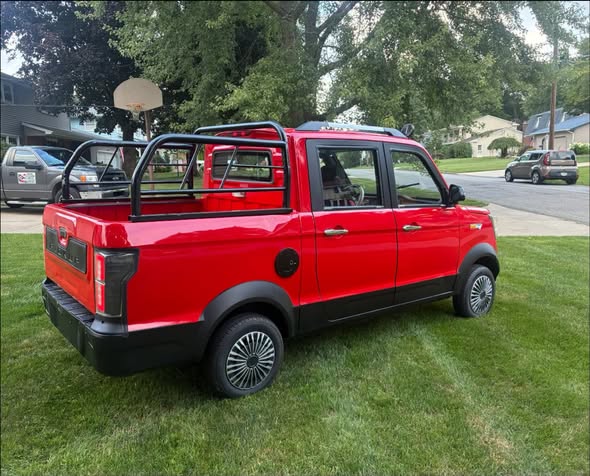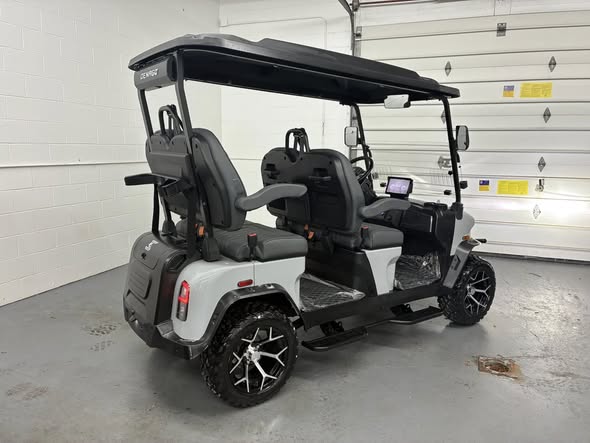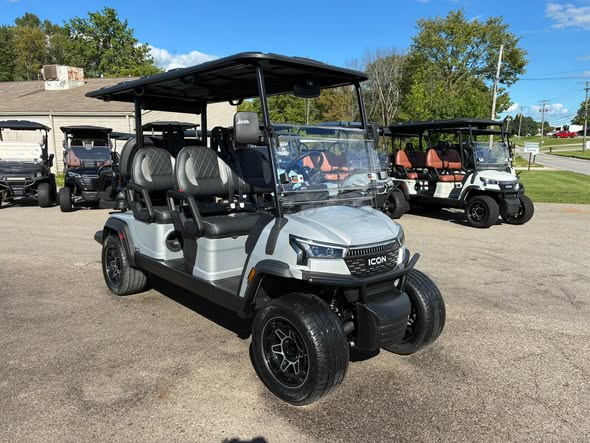
The gas vs electric golf cart question is the first big decision most buyers face, and the right answer depends far more on how you ride than on which option is “better.” A cart that is perfect for a quiet lake community can be the wrong fit for a hunting property or a family that drives all day at a campground.
At Custom Carts we sell both gas and electric carts, including lithium models, across Northeast Ohio, so we have no reason to push you one way. This guide compares range, power, noise, maintenance, winter use and cost of ownership, then helps you match the cart to your routine.
Gas vs Electric Golf Cart: The Quick Answer
If you want the short version of the gas vs electric golf cart debate, here it is. Electric carts are quieter, smoother, cleaner and cheaper to fuel, and lithium models have closed much of the range gap. Gas carts refuel in minutes, run all day without planning around a charger, and are a natural fit for long distances, heavy loads and remote property with no outlet nearby.
- Choose electric for neighborhoods, campgrounds, golf courses, quiet communities and everyday short trips.
- Choose lithium electric if you want electric benefits plus more range, less weight and almost no battery maintenance.
- Choose gas for farms, hunting land, large properties, towing, and long days far from a charger.
The rest of this gas vs electric golf cart guide explains why, so you can weigh the details that matter to you.
How a Gas vs Electric Golf Cart Works
Gas golf carts
A gas golf cart uses a small single-cylinder or twin-cylinder four-stroke engine, typically paired with a continuously variable transmission (CVT) using a drive clutch, driven clutch and belt. Many modern gas carts, such as the EZGO RXV EFI and Club Car Precedent and Onward EFI models, use electronic fuel injection instead of a carburetor for easier starts and smoother running. A starter-generator or starter and alternator keep the 12-volt battery charged for lights and accessories.
Electric golf carts
An electric cart uses a battery pack, most often 48 volts, a motor controller and an electric motor. Traditional electric carts use six 8-volt flooded lead-acid batteries. Newer carts increasingly use a single lithium iron phosphate (LiFePO4) pack. Brands like Denago, ICON, Club Car and EZGO all offer lithium-powered models, and you will find many of them in our electric golf carts collection.
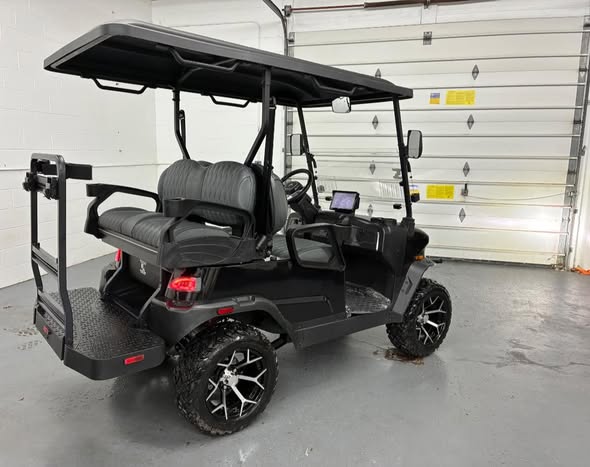
Gas vs Electric Golf Cart Comparison Table
This side-by-side table summarizes the gas vs electric golf cart trade-offs. Ranges are general and vary with model, terrain, load, tires and temperature.
| Factor | Gas | Electric (Lead-Acid) | Electric (Lithium) |
|---|---|---|---|
| Refuel or recharge | Minutes at the pump | Several hours; overnight is typical | Faster than lead-acid; partial top-ups are fine |
| Range | All-day use on a tank for most owners | Shortest; fades as batteries age | Generally more usable range than lead-acid |
| Noise | Engine noise and some vibration | Very quiet | Very quiet |
| Emissions and fumes | Exhaust fumes and fuel smell | None at the cart | None at the cart |
| Routine maintenance | Oil, filters, spark plug, belts, clutches | Watering, terminal cleaning, charging habits | Very little |
| Hills and heavy loads | Strong, consistent pulling | Good, but weakens as charge drops | Strong, steady torque until nearly empty |
| Winter storage | Stabilize fuel; battery care | Keep fully charged; risk of freezing if discharged | Easy; follow storage charge guidance |
| Up-front price | Moderate | Usually the lowest | Usually the highest |
Range and Refueling
Range is often the deciding factor in the gas vs electric golf cart choice. In a gas vs electric golf cart range comparison, a gas cart can generally run all day on a tank, and when it gets low you simply add fuel from a can. For owners who drive long trails, check fence lines on acreage, or use the cart as a work vehicle, that flexibility is hard to beat.
Electric range depends on the battery type, capacity, speed, tires, passengers and terrain. A healthy lead-acid cart handles a typical day around a neighborhood or campground, but range shrinks as the batteries age and in cold weather. Lithium carts usually deliver more usable range and hold it longer over the life of the pack. Our guide to lithium golf cart batteries explains why in detail.
Charging logistics for a gas vs electric golf cart
With electric, you need a place to plug in. Many new carts have onboard chargers, so a standard grounded outlet in your garage or at your campsite is all you need. If your cart lives in a barn without power, or you regularly drive farther than a single charge comfortably allows, that tilts the gas vs electric golf cart decision toward gas.
Gas vs Electric Golf Cart Power, Hills and Towing
In the gas vs electric golf cart power contest, gas carts are known for steady pulling power. They do not lose strength as the tank empties, and they handle long climbs, loaded cargo beds and small trailers well. That is why gas remains popular on farms, hunting land and hilly rural properties.
Electric motors deliver torque instantly, which makes electric carts feel quick off the line. Lead-acid carts can feel sluggish on hills once the batteries are partly drained, because voltage sags under load. Lithium packs hold their voltage much better, so a lithium cart typically climbs with the same strength at half charge as at full. In the gas vs electric golf cart matchup for hills, a well-equipped lithium cart is now a real contender.
Lifted carts and big tires
Lift kits and large all-terrain tires look great and add ground clearance, but they increase rolling resistance. On an electric cart that means less range; on a gas cart it means somewhat more fuel use. Browse our lifted golf carts to see how different setups are configured, and ask us how a lift would affect the model you are considering.

Noise, Comfort and Where You Ride
Noise matters more in the gas vs electric golf cart decision than many buyers expect. Electric carts are nearly silent, which is why they dominate golf courses, gated communities and campgrounds with quiet hours. You can talk easily with passengers, and you will not wake the neighbors on an early ride.
Gas carts produce engine noise, vibration and exhaust. Modern EFI engines are smoother and quieter than older carbureted designs, but they are still noticeably louder than electric. Some campgrounds, communities and private courses restrict gas carts, so check the rules wherever you plan to ride before you settle the gas vs electric golf cart question.
Maintenance: What Each Type Really Needs
Gas cart maintenance
- Engine oil and oil filter changes on the maker’s schedule
- Air filter, fuel filter and spark plug replacement
- Drive belt and starter-generator belt inspection and replacement
- Clutch cleaning and inspection
- 12-volt battery care
- Fuel stabilizer before storage
Lead-acid electric maintenance
- Checking water levels and topping up with distilled water
- Cleaning corrosion from terminals and cable ends
- Charging after use and avoiding deep discharges
- Replacing the full battery set every several years
Lithium electric maintenance
- Using the correct charger
- Keeping connections clean and tight
- Following storage and cold-charging guidance
All carts also need tire pressure checks, brake inspections, steering and suspension checks, and a periodic look at wiring. For a complete schedule, see our golf cart maintenance guide. In the gas vs electric golf cart maintenance comparison, lithium is the clear winner for owners who want minimal upkeep.
Gas vs Electric Golf Cart in Cold Weather and Ohio Winters
Northeast Ohio winters are a real factor in the gas vs electric golf cart decision. Gas carts start and run in cold temperatures much like a lawn tractor or small engine, as long as the fuel is fresh and the 12-volt battery is healthy. That makes gas a practical choice if you use your cart for winter chores such as hauling firewood or plowing a short drive with an attachment.
Batteries of every chemistry deliver less range in the cold. Lead-acid batteries must be kept charged in winter, because a discharged battery can freeze and crack. Lithium packs store well over the winter but should not be charged below freezing unless the pack includes built-in heating or low-temperature protection. If your electric cart is parked for the season in a garage, winter is easy to manage.
Cost of Ownership: Gas vs Electric Golf Cart
Sticker price is only part of the gas vs electric golf cart story. A fair gas vs electric golf cart cost comparison looks at purchase price, energy, maintenance, battery replacement and resale value together.
- Purchase price: Lead-acid electric carts are often the least expensive to buy; lithium carts usually cost the most; gas carts tend to fall in between. Used carts vary widely by year, condition and upgrades.
- Energy: Charging a cart at home generally costs less per mile than gasoline.
- Routine upkeep: Gas carts need regular engine service; lead-acid carts need watering and eventual battery replacement; lithium needs very little.
- Big-ticket items: For lead-acid carts, the battery set is the major recurring cost. For gas carts, it is engine, clutch and belt work as the cart ages.
- Resale: Well-kept carts of all types hold value, and carts with healthy lithium packs or fuel-injected engines tend to attract strong interest.
If you want background on how electric vehicles convert energy efficiently, the U.S. Department of Energy offers helpful resources at energy.gov. And if the budget is the sticking point, financing is available with approved credit through our lending partners. Ask about current offers.
Street-Legal Use and Local Rules
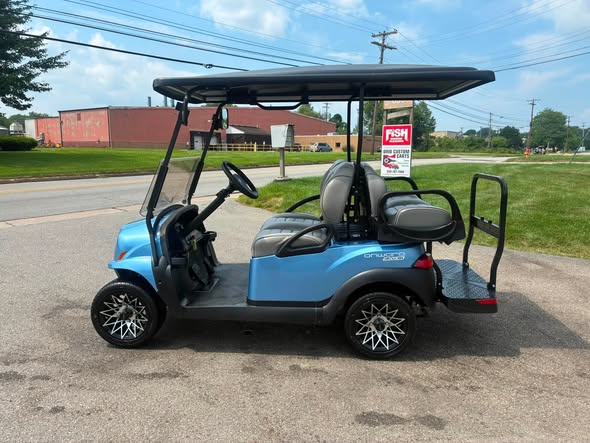
If you hope to drive on public roads, the gas vs electric golf cart choice interacts with the law. Under federal rules, a low-speed vehicle (LSV) is a four-wheeled vehicle with a top speed between 20 and 25 mph that meets specific safety equipment standards. The National Highway Traffic Safety Administration oversees those federal standards. Most factory-built LSVs on the market today are electric, although the standard itself is not limited to electric power.
In Ohio, what you can drive and where depends on state law and local ordinances. Our street legal golf cart Ohio guide explains the basics. You can also browse our street legal golf carts to see models built for road use.
Which Type Fits Your Lifestyle?
Every buyer is different. Here is how we usually help customers settle the gas vs electric golf cart decision based on real-world use.
Neighborhood and community cruising
Electric, especially lithium. Short trips, quiet streets and easy home charging are exactly what electric carts do best. The lower noise keeps neighbors happy, and lithium removes the watering chore.
Campgrounds and RV parks
Electric is usually preferred for noise and fume reasons, and many parks favor it. Gas can still make sense if your site lacks reliable power, but confirm the park’s rules first.
Farms, hunting land and large properties
Gas often wins. Long days, heavy loads, rough terrain and no outlet in the back forty all favor quick refueling. A lifted gas cart with a cargo bed is a true utility machine.
Golf and light recreational use
Either works. Many courses prefer electric, and a used lead-acid cart can be an affordable option if you ride only occasionally and are happy to maintain the batteries.
Families who need more seats
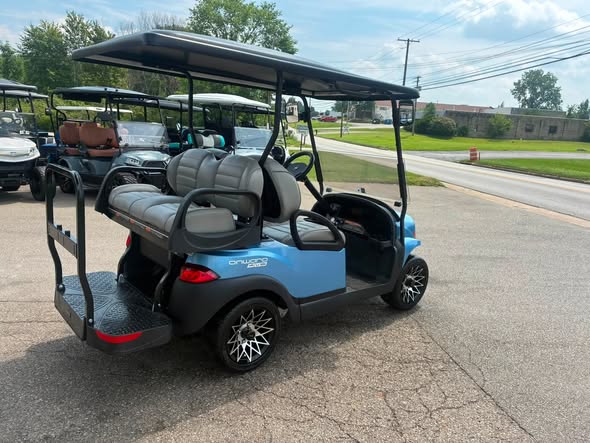
Both gas and electric carts come in 2-, 4- and 6-passenger layouts. If you are unsure how many seats you need, read our comparison of a 4 vs 6 passenger golf cart before you decide.
Questions to Ask Before Settling the Gas vs Electric Golf Cart Choice
Before you commit, run through a few honest questions. Your answers usually point clearly to one side of the gas vs electric golf cart decision, and they help us recommend the right model when you call or visit.
- How far do you drive on a typical day? Short, repeated trips favor electric. Long, unpredictable days favor gas or a high-capacity lithium cart.
- Where will the cart be stored and charged? A garage with an outlet makes electric easy. A barn or shed with no power makes gas more practical.
- Do rules where you ride limit noise or fuel? Some communities and campgrounds prefer or require electric carts.
- Will you haul, tow or climb often? Heavy work leans toward gas or a lithium cart with a strong motor.
- How much maintenance do you want to do? If the answer is “as little as possible,” lithium electric is hard to beat.
- What is your total budget? Consider purchase price, financing, energy, service and future battery costs, not just the sticker.
Write your answers down and bring them with you. A clear picture of your routine makes the gas vs electric golf cart comparison much simpler than reading spec sheets alone.
Test Driving a Gas vs Electric Golf Cart
Nothing replaces time behind the wheel. When you test drive a gas vs electric golf cart back to back, the differences become obvious within a few minutes. Pay attention to how each cart starts, accelerates and stops, how loud it is at cruising speed, and how comfortable the ride feels with passengers aboard.
- Drive up and down a slope if one is available, and note whether the cart slows.
- Listen for noise and feel for vibration through the seat and steering wheel.
- Try reverse and a few tight turns to judge handling.
- Ask how the cart is charged or fueled and where the charger or fuel fill is located.
- Check that lights, horn, turn signals and any accessories work.
Test driving a gas vs electric golf cart the same day, on the same route, gives you the fairest comparison. Our team is happy to set that up.
Buying New or Used
Whichever side of the gas vs electric golf cart question you land on, new carts come with manufacturer warranties, the latest features and a clean history. Many new lithium carts we carry include long battery warranties; for example, Denago lists a 2-year cart and 8-year battery warranty. You can learn more from manufacturers such as Club Car and Yamaha.
Used carts on either side of the gas vs electric golf cart divide can be excellent value if you know what to look for. On a used gas cart, listen for a smooth idle and check for oil leaks, smoke and worn belts. On a used electric cart, ask about battery age and bring a charger test into your inspection. Our used golf cart checklist walks through each step, and our used golf carts page shows current pre-owned inventory.
Frequently Asked Questions
In a gas vs electric golf cart comparison, which is better for hills?
Gas carts pull steadily regardless of fuel level, which makes them a traditional favorite for hills. Lithium electric carts also climb strongly and hold power as the charge drops. Lead-acid electric carts can slow on long climbs when the batteries are partly drained.
Which lasts longer in a gas vs electric golf cart matchup?
Both can last many years with good care. Gas carts need ongoing engine, belt and clutch maintenance. Electric carts have fewer moving parts, but lead-acid battery sets need periodic replacement. Lithium packs typically last much longer than lead-acid.
Are electric golf carts cheaper to run?
Generally, yes. Charging at home usually costs less per mile than gasoline, and electric drivetrains need less routine service. Factor in battery replacement for lead-acid carts when you compare long-term costs.
Can I convert a gas golf cart to electric?
Conversions exist, but they rarely make sense in a gas vs electric golf cart cost comparison because they are usually complex and costly compared with buying an electric cart or trading in. Most owners are better served by trading their gas cart toward an electric model through our trade-in program.
Which is better for winter in Ohio?
Gas starts and runs well in the cold with fresh fuel. Electric carts lose some range in cold weather and need proper battery storage, but they are easy to winterize in a garage.
Find Your Perfect Cart
There is no universal winner in the gas vs electric golf cart matchup. Electric, and especially lithium, is the smart choice for quiet, everyday riding with minimal maintenance. Gas is the workhorse for long days, big properties and places without power. The best cart is the one that matches how you actually ride.
Browse gas, electric and lithium models side by side in the Custom Carts shop, or contact us and tell us how you plan to use your cart. You can also call or text (330) 752-8570 to schedule a visit and test drive both types with our Northeast Ohio team.