
Regular golf cart maintenance is the simplest way to keep your cart safe, reliable and worth more when it is time to sell or trade. A few minutes of care each month prevents most of the breakdowns we see, from dead batteries in spring to worn brakes and flat tires halfway through the season.
This guide from Custom Carts in Northeast Ohio covers golf cart maintenance for all three power types: traditional 48V lead-acid electric, lithium and gas. You will find a seasonal schedule, practical checklists, and specific advice for storing your cart through an Ohio winter.
Why Golf Cart Maintenance Matters
A golf cart may look simple, but it combines a drivetrain, a braking system, steering, suspension, electrical wiring and either a battery pack or an engine. Each of those systems wears over time. Consistent golf cart maintenance catches small problems, like a loose cable or a low tire, before they turn into expensive repairs.
Good care also protects your investment. Carts with documented service histories tend to sell faster and earn stronger trade-in offers. If you ever plan to upgrade, the golf cart maintenance you do today becomes equity tomorrow.
- Safety – brakes, tires, steering and lights need to work every time you drive.
- Reliability – healthy batteries and a well-tuned engine start when you need them.
- Battery and engine life – proper charging and oil changes extend the life of the most expensive parts.
- Resale value – clean, well-kept carts hold their value better.
Golf Cart Maintenance Basics for Every Cart
Some tasks apply no matter how your cart is powered. Build these into a monthly habit and you will cover the majority of everyday golf cart maintenance in about 15 minutes.
Tires and Wheels
Check tire pressure at least monthly with a low-pressure gauge. The correct number is printed on the tire sidewall or listed in your owner’s manual, and it varies between standard turf tires and larger all-terrain tires on lifted carts. Uneven pressure makes a cart pull to one side and wears tires faster.
Look for cracks, bulges, embedded debris and uneven tread wear. Uneven wear can point to alignment or suspension problems. While you are there, confirm the lug nuts are snug, especially after new wheels are installed.
Brakes
Test the brakes before every drive. The cart should stop smoothly and straight without grinding or pulling. Many newer carts use disc brakes or electronic braking systems, while older carts often use mechanical drum brakes with cables that stretch over time and need adjustment.
If the pedal feels soft, the parking brake will not hold on a slope, or you hear metal-on-metal noise, have the brakes inspected right away. Brakes are never a place to postpone golf cart maintenance.
Steering and Suspension
Steering checks are an easy part of golf cart maintenance to overlook. Excess play in the steering wheel, clunking over bumps, or a cart that wanders at speed are signs of worn tie rod ends, ball joints, bushings or shocks. Lifted carts put extra stress on these parts, so inspect them more often if you drive off-road or on rough campground trails.
Lights, Signals and Accessories
Walk around the cart and test the headlights, taillights, brake lights, turn signals and horn. If your cart is street legal, working lights and signals are required equipment, not just conveniences. Check USB ports, sound bars and light bars too, since loose connections are common after a bumpy season.
Cleaning
Wash the body with mild soap and water, and avoid blasting high-pressure water at the battery compartment, controller, charger port or motor. Wipe seats with a vinyl-safe cleaner to prevent cracking. Keeping the cart clean makes golf cart maintenance easier because leaks, corrosion and loose parts are easier to spot.

Electric Golf Cart Maintenance: 48V Lead-Acid Batteries
Traditional electric carts use a pack of deep-cycle lead-acid batteries, usually wired to make 48 volts. These batteries are dependable and affordable, but they need more hands-on golf cart maintenance than any other system on the cart.
Watering
Flooded lead-acid batteries lose water during charging. Check electrolyte levels regularly, often every two to four weeks during the driving season. Use only distilled water, and add it after charging rather than before, filling just enough to cover the plates by the level your battery manufacturer recommends. Never overfill, because acid can spill out during the next charge.
Wear safety glasses and gloves when you work around batteries. Battery acid is corrosive, and charging produces hydrogen gas, so work in a ventilated area and keep sparks and flames away. Safety comes first in every golf cart maintenance task.
Cleaning Terminals and Cables
White or green crust on terminals is corrosion. Disconnect the pack, clean the terminals with a baking soda and water solution and a brush, rinse carefully, dry, and apply a terminal protectant. Check that every cable is tight, since a single loose connection can cause poor performance, heat and even melted terminals.
Charging Habits
- Charge after each day of use, even if you only drove a short distance.
- Let the charger finish its full cycle rather than unplugging early.
- Avoid running the pack completely flat, which shortens battery life.
- Use the charger designed for your cart’s voltage and battery type.
With consistent electric golf cart maintenance, a quality lead-acid pack commonly lasts several years. Neglected packs can fail much sooner, and a full replacement set is one of the largest repair bills an electric cart owner will face.
Lithium Golf Cart Maintenance
Lithium carts have become extremely popular because they need far less battery care. There is no watering, no acid and no terminal corrosion from spilled electrolyte. A built-in battery management system, or BMS, protects the cells from overcharging, deep discharge and temperature extremes.
That does not mean lithium golf cart maintenance is zero. You still need to care for the tires, brakes, steering and electrical connections, and you should follow the charging and storage guidance from your battery manufacturer. For a deeper look at the technology, read our guide to lithium golf cart batteries.
Lithium Care Checklist
- Use the charger that came with the cart or one approved for your specific battery.
- Keep the battery display and app, if equipped, updated and check for fault codes.
- Inspect main cable connections for tightness a few times per season.
- Avoid charging a battery that is below freezing unless the manufacturer says the pack has built-in heating.
- Follow the manufacturer’s long-term storage instructions, including any storage mode or disconnect switch.
Many new lithium carts also come with strong warranties. Denago listings we carry, for example, include a 2-year cart warranty and an 8-year battery warranty. Following the recommended golf cart maintenance helps keep that coverage in good standing, so keep your receipts and notes. Learn more on our warranty page.

Gas Golf Cart Maintenance
Gas carts offer long range and quick refueling, but their small engines need routine service much like a lawn tractor or motorcycle. Your owner’s manual is the final word on intervals, but the following tasks form the core of gas golf cart maintenance.
Engine Oil and Filter
Change the oil and filter on the schedule in your manual. Many manufacturers call for oil changes at roughly 100 to 125 hours of use or at least once a year, whichever comes first. Check the oil level with the dipstick regularly, and use the grade and type specified for your engine.
Air Filter, Spark Plug and Fuel Filter
A clogged air filter robs power and wastes fuel, especially on dusty gravel roads and trails. Inspect it often and replace it when it looks dirty. Spark plugs and fuel filters are inexpensive parts that make a noticeable difference in starting and smooth running.
Belts and Clutches
Most gas carts use a drive belt and a starter-generator belt. Look for cracks, glazing and fraying, and replace worn belts before they snap. A slipping belt or jerky acceleration can also point to clutch wear, which a technician should inspect.
Fuel System
Use fresh fuel and keep the cap tight. If the cart will sit for more than a few weeks, add fuel stabilizer. Stale fuel is one of the most common causes of hard starting in spring, and fuel care is one of the cheapest golf cart maintenance habits you can build.
12V Battery
This small battery is easy to forget during gas golf cart maintenance. Gas carts still rely on a 12-volt battery for starting and accessories. Keep its terminals clean and consider a battery maintainer during long storage periods.
Golf Cart Maintenance by Power Type: Side-by-Side
The table below compares the most common golf cart maintenance tasks for each power type. Intervals are general guidelines; always follow your owner’s manual and manufacturer recommendations.
| Task | 48V Lead-Acid Electric | Lithium Electric | Gas |
|---|---|---|---|
| Battery watering | Every few weeks in season | Not required | Not required (12V battery check only) |
| Terminal cleaning | Monthly check, clean as needed | Check connections a few times per season | Check 12V terminals seasonally |
| Charging routine | Charge after every use | Follow manufacturer guidance | Not applicable |
| Oil and filter | Not required | Not required | Typically about 100 to 125 hours or yearly |
| Air filter and spark plug | Not required | Not required | Inspect regularly, replace as needed |
| Tires, brakes, steering | Monthly | Monthly | Monthly |
| Winter storage prep | Full charge, periodic top-up | Manufacturer storage mode | Fuel stabilizer, battery maintainer |
If you are still deciding which power type suits you, our comparison of gas vs electric golf carts explains the trade-offs in ownership and upkeep.
A Seasonal Golf Cart Maintenance Schedule
Northeast Ohio has a clear driving season and a long winter, so it makes sense to organize your golf cart maintenance around the calendar. Here is a simple golf cart maintenance schedule you can adapt.
Spring: Wake-Up and Inspection
- Fully charge electric carts and check lead-acid water levels.
- For lithium carts, take the battery out of storage mode as directed and confirm the display shows no faults.
- For gas carts, check oil, inspect belts, and replace the spark plug or filters if due.
- Inflate tires to the recommended pressure and inspect for cracks from the cold.
- Test brakes, steering, lights, signals and the horn before the first drive.
Summer: Peak Season Care
- Check lead-acid water more often, since heat and heavy use increase water loss.
- Keep the cart shaded when possible to protect seats, batteries and the roof.
- Wash off dust, pollen and campground grime regularly.
- Watch for brake fade or unusual noises after long, hilly drives.
Fall: Pre-Storage Service
- Schedule a professional inspection or tune-up before storing the cart.
- Change gas engine oil so used oil does not sit in the engine all winter.
- Clean the cart thoroughly, including under the seats and in the battery bay.
- Repair small issues now so the cart is ready in spring.
Winter: Storage and Monitoring
- Follow the Ohio winter storage steps below.
- Check on the cart every few weeks for pests, moisture and battery charge.
Ohio Winter Storage: Protecting Your Cart Until Spring
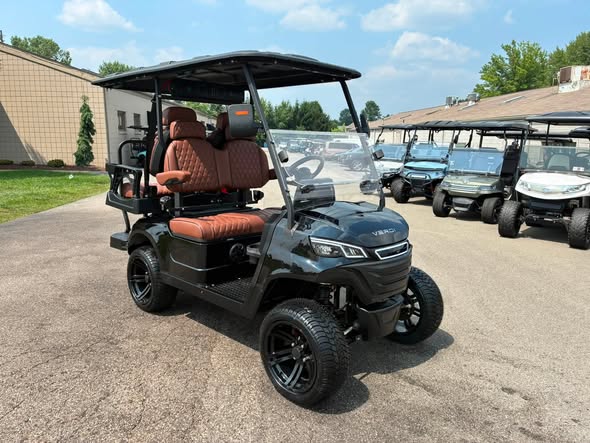
Cold, damp Ohio winters are hard on batteries, tires and seats. Proper storage is the most important golf cart maintenance task of the year for owners in our region, and it is where many battery problems begin.
Choose the Right Storage Spot
A dry garage or shed is ideal. Keep the cart off bare dirt, away from fertilizer and chemicals, and out of direct contact with snow and road salt. If you must store it outdoors, use a breathable, fitted cover rather than a plastic tarp, which can trap moisture against the body.
Electric Lead-Acid Carts
A fully charged lead-acid battery resists freezing much better than a discharged one, so charge the pack completely before storage. Clean the tops of the batteries, check water levels, and put the run/tow switch in tow mode if your cart has one. Check the charge every few weeks and top it up as needed, or follow your charger’s instructions for storage.
Lithium Carts
Lithium batteries handle storage well, but they still need the right approach. Many manufacturers recommend storing lithium packs at a partial state of charge and using a storage mode or disconnect switch to reduce drain. Because procedures differ from brand to brand, follow the instructions in your manual or ask us for the specific steps for your cart.
Gas Carts
Fill the tank and add fuel stabilizer, then run the engine briefly so treated fuel reaches the carburetor or injection system. Change the oil, connect a battery maintainer to the 12V battery, and plug the exhaust and air intake openings loosely to keep rodents out. Remove the plugs before starting in spring.
General Winter Tips
- Inflate tires to the recommended pressure, or place the cart on jack stands to prevent flat spots.
- Release the parking brake if your manual allows, to prevent sticking.
- Set mouse traps or deterrents nearby, since rodents love to chew wiring.
- Remove valuables, coolers and electronics that could be damaged by the cold.
The U.S. Department of Energy offers general information on battery technology and energy efficiency if you want to understand why temperature affects battery performance.
DIY Golf Cart Maintenance vs. Professional Service
Much of your routine golf cart maintenance can be done at home with basic tools: tire pressure, cleaning, battery watering, terminal care and visual inspections. Other jobs are better left to a technician with the right equipment and experience.
| Do It Yourself | Leave It to a Professional |
|---|---|
| Tire pressure and visual tire checks | Brake adjustments and brake part replacement |
| Washing and seat care | Controller, motor and wiring diagnostics |
| Lead-acid watering and terminal cleaning | Battery pack replacement or lithium conversion |
| Checking lights and signals | Clutch, belt and engine repairs |
| Oil level checks on gas carts | Alignment, lift kits and suspension work |
A yearly professional inspection is a smart addition to your own golf cart maintenance routine. A technician can spot wear you might miss and keep your cart running safely.
Signs Your Cart Needs Attention Now
Do not wait for the next scheduled check if you notice any of these warning signs. Addressing them quickly is the most cost-effective kind of golf cart maintenance.
- Noticeably shorter range or slow acceleration on an electric cart.
- A burning smell, hot battery cables or melted terminals.
- Grinding, squealing or a soft brake pedal.
- Hard starting, stalling or smoke from a gas engine.
- Clunking from the suspension or loose steering.
- Fault codes or warning lights on the dash or battery display.
When it is time to buy, a well-maintained cart makes all the difference. If you are shopping pre-owned, use our used golf cart checklist to judge how well a cart has been cared for. And if repairs are adding up on an older cart, it may be time to consider a trade-in toward something newer.
Frequently Asked Questions
How often should I do golf cart maintenance?
Check tires, brakes, lights and battery connections monthly during the driving season, water lead-acid batteries every few weeks, and schedule a professional inspection at least once a year. Gas carts also need oil changes on the interval listed in the owner’s manual.
Do lithium golf carts need maintenance?
Yes, but much less battery care. Lithium packs do not need watering or acid cleanup, but the rest of the cart, including tires, brakes, steering and connections, still needs regular golf cart maintenance. Follow the manufacturer’s charging and storage guidance.
Should I leave my electric golf cart plugged in all winter?
It depends on your charger and batteries. Some modern chargers are designed to maintain the pack safely, while others should not be left connected for months. Check your manual or ask us, and always start winter storage with a full charge on lead-acid batteries.
What kind of water goes in golf cart batteries?
Use only distilled water in flooded lead-acid batteries. Tap water contains minerals that can build up and reduce battery life. Lithium batteries never need water.
How long do golf cart batteries last?
Lifespan depends on battery type, usage and care. Well-maintained lead-acid packs commonly last several years, while lithium batteries generally last considerably longer and often carry longer warranties. Consistent golf cart maintenance and proper charging have a major effect on how long either type lasts.
Keep Your Cart Road-Ready with Custom Carts
A little golf cart maintenance goes a long way. Check tires, brakes and lights monthly, care for your batteries or engine according to their type, follow a seasonal schedule, and store your cart properly through the Ohio winter. Your cart will reward you with safer rides, fewer surprises and better resale value.
Ready for an upgrade or looking for a low-maintenance lithium cart? Shop our inventory of new and used gas, electric and lithium carts, or browse our lithium golf carts. Have a question about caring for your cart? Contact us or call or text (330) 752-8570 to talk with our team in Northeast Ohio.